



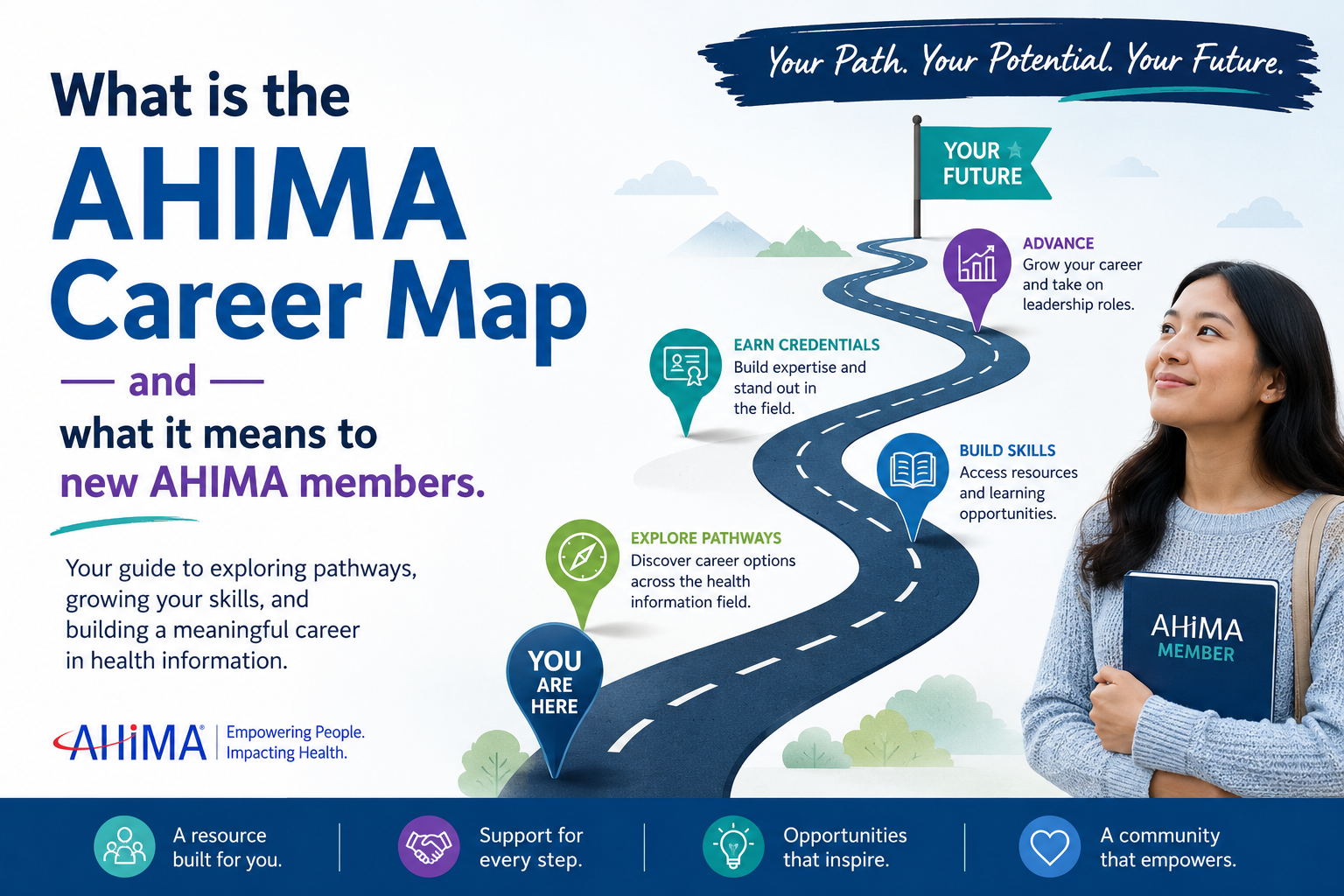
What is the AHIMA Career Map and what it means to new AHIMA members.
Starting a career in health information (HI) or health information management (HIM) can feel overwhelming. With so many specialties, certifications, and job titles available, it can be difficult to determine the best path forward. To help professionals navigate these opportunities, the American Health Information Management Association (AHIMA) developed the AHIMA Career Map—an interactive career-planning tool designed to showcase the breadth of career opportunities available within the health information profession.
For new AHIMA members, the Career Map serves as more than just a directory of job titles. It is a strategic roadmap that helps members visualize career progression, identify skill gaps, explore emerging opportunities, and make informed decisions about professional development.
What Is the AHIMA Career Map?
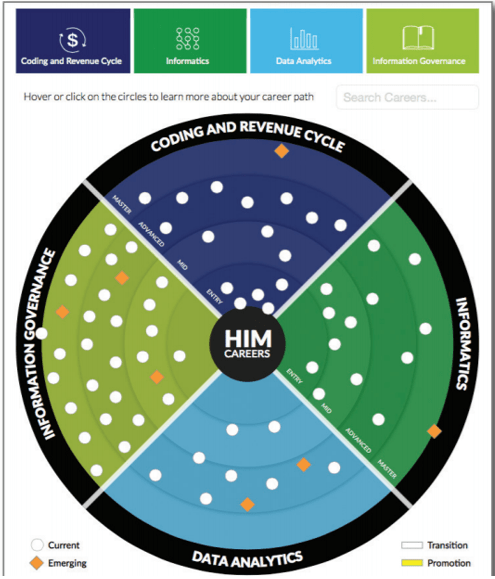
The AHIMA Career Map is an interactive visual resource that illustrates career pathways within the health information profession. It organizes roles into major job families and experience levels, helping users understand how different positions connect and how careers can evolve over time.
The map provides detailed information for each role, including:
- Job descriptions
- Key responsibilities
- Required skills and competencies
- Education and training recommendations
- Work experience requirements
- Career transition opportunities
- Salary information where available
The Career Map was created to help students, recent graduates, career changers, and experienced professionals better understand the expanding landscape of health information careers.
Understanding the Career Map Structure
The Career Map is organized around several core health information career domains, including:
Coding and Revenue Cycle
Professionals in this area focus on medical coding, reimbursement, revenue cycle management, compliance, and billing operations. Common positions include:
- Medical Coder
- Coding Auditor
- Revenue Cycle Manager
- Compliance Specialist
Information Governance
These roles oversee data quality, privacy, security, compliance, and information management practices across healthcare organizations.
Examples include:
- Privacy Officer
- Information Governance Manager
- Data Quality Specialist
- Compliance Director
Informatics
Informatics professionals bridge healthcare operations and technology, helping organizations improve care delivery through data and information systems.
Examples include:
- Clinical Informatics Specialist
- EHR Implementation Specialist
- Systems Analyst
- Health IT Consultant
Data Analytics
As healthcare becomes increasingly data-driven, analytics professionals play a critical role in transforming data into actionable insights.
Examples include:
- Healthcare Data Analyst
- Business Intelligence Analyst
- Population Health Analyst
- Data Governance Specialist
Career Levels Explained
One of the most useful features of the Career Map is its progression framework. Roles are categorized into experience levels that illustrate potential advancement opportunities.
Entry Level
These positions typically require limited professional experience and serve as starting points for new graduates and professionals entering the field.
Mid-Level
Mid-level professionals often have several years of experience and greater responsibility. They may supervise projects, teams, or specialized functions.
Advanced Level
Advanced roles typically involve management, strategic planning, and operational leadership responsibilities.
Executive or Master Level
These positions include directors, vice presidents, chief officers, and other executive leaders responsible for organizational strategy and governance.
Why the Career Map Matters for New AHIMA Members
1. It Shows the Full Scope of the Profession
Many new members initially associate health information careers with coding alone. The Career Map reveals a much broader range of opportunities in analytics, informatics, privacy, governance, leadership, and emerging technologies.
This broader perspective helps members discover career options they may not have previously considered.
2. It Helps with Career Planning
Rather than guessing what comes next, members can see potential promotion paths and lateral transitions between related roles.
For example, a coding professional may discover opportunities to move into auditing, compliance, data analytics, or revenue cycle leadership.
3. It Identifies Skill Gaps
Each role outlines the skills and competencies needed for success. New members can compare their current qualifications with their desired future position and identify areas for professional growth.
This information helps members make smarter decisions about:
- Continuing education
- Certifications
- Professional development courses
- Specialized training programs
4. It Supports Certification Decisions
AHIMA offers numerous credentials that support different career pathways. The Career Map helps members align certification goals with long-term career objectives.
Rather than pursuing credentials without a clear purpose, members can strategically select certifications that support their desired career progression.
5. It Highlights Emerging Opportunities
Healthcare is evolving rapidly through artificial intelligence, data analytics, interoperability, cybersecurity, and digital health initiatives.
The Career Map identifies emerging roles that may become increasingly valuable in the future, helping members stay ahead of industry trends.
How New Members Can Use the Career Map Effectively
Start with Your Current Role
Identify your current position or the role closest to your experience level. Review the responsibilities and required competencies.
Explore Adjacent Opportunities
Look at connected positions to discover potential next steps. You may find opportunities that align with your interests and strengths.
Create a Development Plan
Choose a target role and build a roadmap that includes:
- Required education
- Certifications
- Skills development
- Networking opportunities
- Relevant AHIMA resources
Revisit the Map Regularly
Healthcare careers continue to evolve. Reviewing the Career Map annually can help ensure your professional goals remain aligned with industry demands.
The Value of AHIMA Membership
The Career Map becomes even more valuable when combined with AHIMA membership benefits, including:
- Professional networking opportunities
- Educational resources
- Industry publications
- Certification programs
- Career development tools
- Continuing education opportunities
Together, these resources help members move from career exploration to career advancement.
Conclusion
For new AHIMA members, the AHIMA Career Map is one of the most valuable career-planning resources available. It transforms a complex healthcare landscape into a clear visual guide that helps professionals understand where they are today and where they can go tomorrow.
Whether you are a student exploring your first role, a recent graduate entering the workforce, or an experienced professional seeking advancement, the Career Map provides a practical framework for career growth. By using it to identify opportunities, build skills, and plan future steps, new AHIMA members can take a more strategic approach to developing a successful and rewarding career in health information.